
The ASP observes World Malaria Day on 25 April 2026.
Find out more about malaria parasites and what some of our ASP researchers are working on to combat this deadly parasite. Join our online ASP Seminar Series Friday 15 May @1pm AEST, when Katrina Larcher, WEHI will present “Plasmodium falciparum GAPM proteins are required for merozoite invasion and gametocyte maturation”.
Listen to episode 4 of ASP Parasite Podcast: What’s eating you? which is all about Malaria. In this episode our expert parasitologist is Dr Jill Chmielewski from Walter and Eliza Hall Institute of Medical Research. Jill works as a researcher, studying malaria, a parasitic disease which kills primarily young children in poorer parts of the tropics and sub-tropics. Search for ASP parasite podcast: What’s eating you? on Spotify, iTunes or Apple podcasts). Or you can listen directly from our async.com page https://shows.async.com/show/what-s-eating-you-vr7KKXOx
If you would like to run an outreach event about malaria please utilise our Crafty Parasites – Malaria resource https://www.parasite.org.au/outreach/craftyparasites/
In this outreach resource, award-winning scientist, artist, and STEAM advocate, Dr Rina Fu, is with two young scientists as they learn about the parasites, the real-world research, and the global impact of this deadly disease.
Read papers published in our ASP journals, International Journal for Parasitology (IJP), IJPDDR, IJPPAW about malaria.
 Sarah N. Farrell, Anton Cozijnsen, Vanessa Mollard, Papireddy Kancharla, Rozalia A. Dodean, Jane X. Kelly, Geoffrey I. McFadden, Christopher D. Goodman,
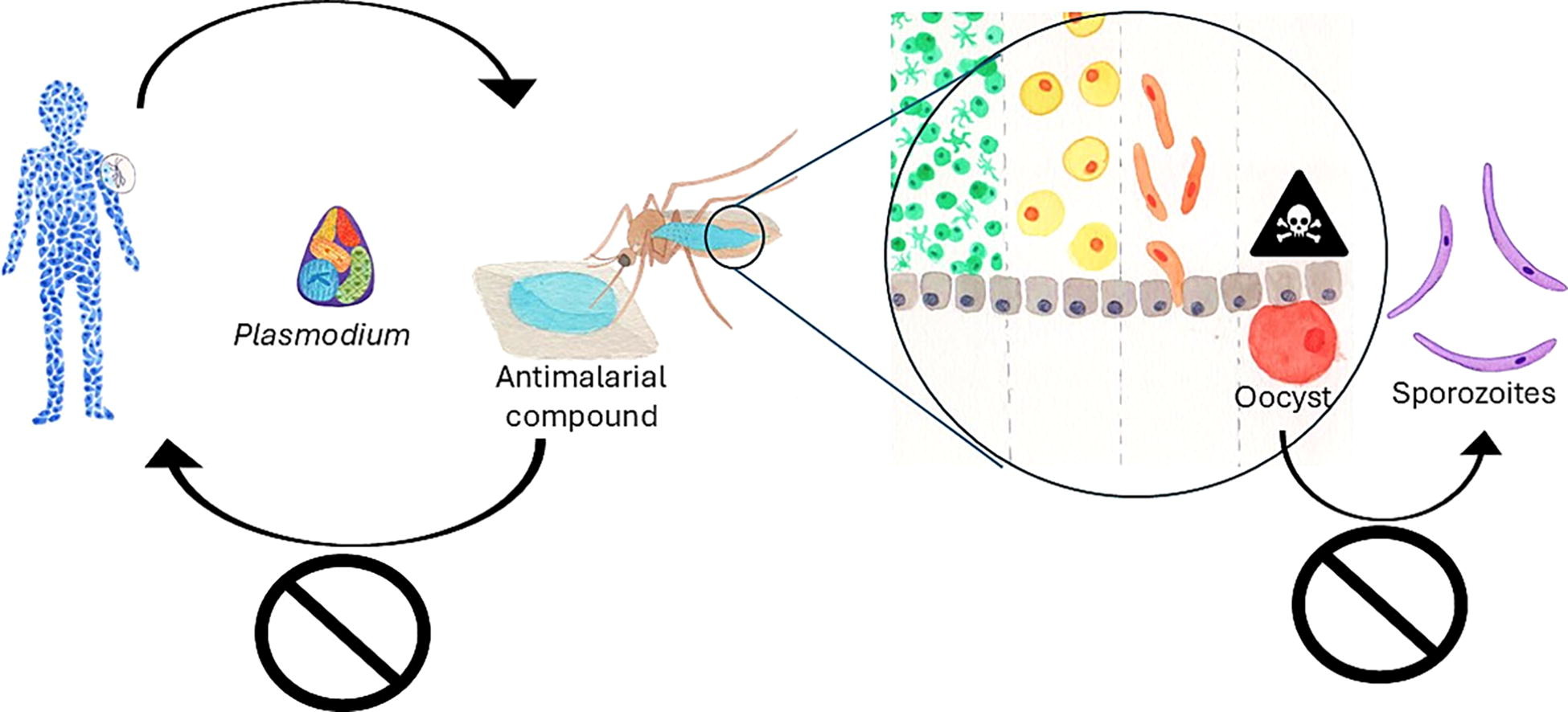
“Identifying antimalarials that disrupt malaria parasite transmission when fed to the mosquito”, International Journal for Parasitology, Volume 55, Issue 11, 2025,
Pages 603-613, ISSN 0020-7519, https://doi.org/10.1016/j.ijpara.2025.05.005 (https://www.sciencedirect.com/science/article/pii/S0020751925000967)
Abstract: A decade-long decline in malaria cases has plateaued, primarily due to parasite drug resistance and mosquito resistance to insecticides used in bed nets and indoor residual spraying. Here, we explore the innovative control strategy targeting Plasmodium with antimalarials during the mosquito stages. This strategy has the potential to reduce the risk of resistance emerging because a relatively small population of parasites within the mosquito is subject to selection. After validating mosquito feeding strategies, we screened a range of parasiticidal compounds by feeding them to mosquitoes already infected with mouse malaria (P. berghei). Three antimalarials showed activity against P. berghei in mosquitoes, apparently targeting specific stages of P. berghei development during transmission. Borrelidin, a threonyl-tRNA synthetase inhibitor, significantly reduced P. berghei sporozoite numbers. Azithromycin, an antibiotic targeting apicoplast protein synthesis, significantly lowered sporozoite infectivity in mice. T111, a next generation compound targeting the parasite electron transport chain, reduced sporozoite numbers in P. berghei at equivalent concentrations to the gold standard electron transport chain inhibitor, atovaquone. T111 also prevented sporozoite production in mosquitoes infected with human malaria, P. falciparum, even after very short exposure times. Encouragingly, T111 remained efficacious after being freeze-dried onto a substrate and later reconstituted with water, suggesting this compound would be effective in easy-to-distribute-and-deploy transmission control devices. Our findings suggest that several antimalarials can be used to target mosquito-stage parasites via sugar baits and limit malaria transmission. Importantly, mosquito feeding of antimalarials could vastly increase the range of potentially useful parasiticidal compounds to include those failing to meet the exacting standards required for human antimalarial drugs, potentially improving malaria control for minimal cost.
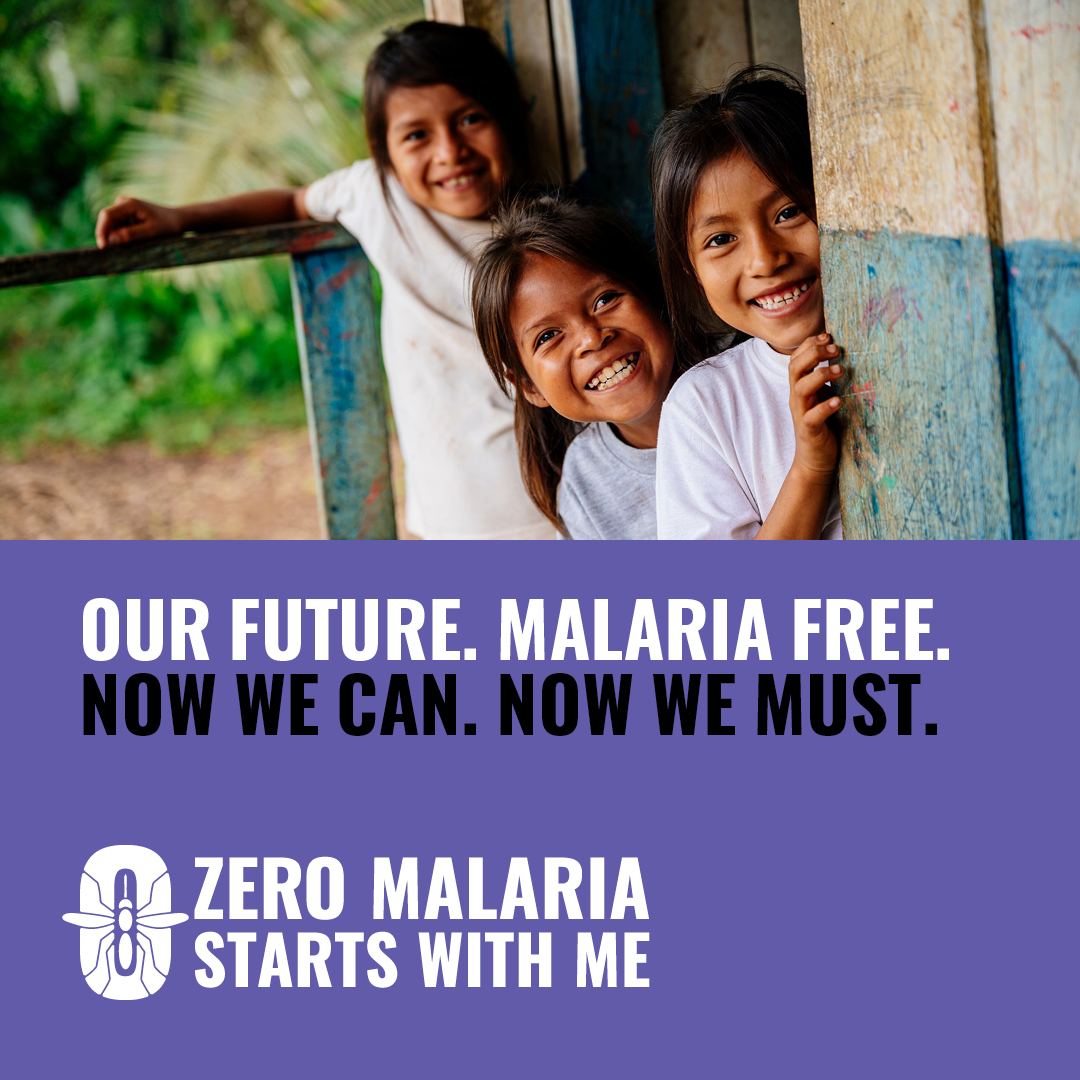
Finally, read this message from the WHO World Malaria Day 2026 campaign https://www.who.int/campaigns/world-malaria-day/2026
“Driven to End Malaria:
Now We Can. Now We Must.
Science is advancing faster than ever. For the first time, ending malaria in our lifetime is a real possibility. New vaccines, treatments, malaria control tools and pioneering technologies – including genetic modification of mosquitos and long-acting injectables – are in development. Already, 25 countries are rolling out malaria vaccines to protect 10 million children a year. Next-generation mosquito nets now make up 84% of all new nets distributed. Nationally-led programmes are driving change. The possibility has never been greater.
On World Malaria Day 2026, the World Health Organization joins partners to launch the campaign: “Driven to End Malaria: Now We Can. Now We Must.” This is a rallying cry to grasp the moment—to protect lives now and fund a malaria-free future.
Progress is real and measurable
Since 2000, 2.3 billion cases and 14 million deaths have been averted. To date, 47 countries have been certified malaria-free (of which two in 2024 and three in 2025), while 37 countries reported fewer than 1000 cases in 2024. Success is possible, even in tough areas: The Greater Mekong Subregion proves elimination is achievable, with cases falling by nearly 90% despite long-standing drug resistance.
Between 2000 and 2024, the number of malaria-endemic countries fell sharply, dropping from 108 to 80. Over the same period:
- Countries with fewer than 10 000 cases rose from 27 in 2000 to 46 in 2024.
- Countries with fewer than 100 indigenous cases increased from 6 to 26.
- Countries with fewer than 10 indigenous cases increased from 4 to 24.
But the global situation is stalling: In 2024, there were an estimated 282 million cases and 610,000 deaths—a slight increase from 2023.
According to the World Malaria Report 2025, progress is at risk:
Biological challenges:
- Drug resistance: Artemisinin partial resistance is confirmed in four African countries (Eritrea, Rwanda, Uganda, United Republic of Tanzania,) and spreading. This is a critical danger to the main treatments for malaria.
- Insecticide resistance: Resistance to pyrethroids (the main chemical on bed nets) is widespread, confirmed in 48 out of 53 reporting countries.
- Diagnostic failure: pfhrp2 gene deletions, which can make rapid diagnostic tests fail, are spreading and now reported in 46 endemic countries.
- Invasive mosquitoes: Anopheles stephensi, an urban-dwelling, insecticide-resistant mosquito, is expanding its range in Africa, posing a new threat to cities.
Systemic challenges:
- A massive funding gap: 2024 funding (US$ 3.9 billion) was less than half of the US$ 9.3 billion 2025 target. A projected shortfall of US$ 5.4 billion leaves the response dangerously under-resourced.
- Fragility of aid: Recent cuts in global health aid have disrupted health systems, surveillance, and campaigns, demonstrating how quickly progress can be undone.
Humanitarian & environmental challenges: Climate change, conflict, and humanitarian crises continue to drive malaria resurgence and disrupt essential services.
Despite the challenges, several interventions are being successfully scaled up and showing impact:
New-Generation nets: In 2024, 84% of nets shipped to Africa were the more effective PBO or dual active ingredient nets, up from just 10% in 2019.
Vaccines: A major breakthrough. To date, vaccines are rolling out in 25 countries, protecting millions of children.
Chemoprevention: Seasonal malaria chemoprevention (SMC) now reaches 54 million children. Perennial malaria chemoprevention (PMC) is also expanding.
Improved treatment of children: More febrile children are being diagnosed and treated with effective medicines (ACTs) than in the past.
To make a malaria-free future a reality, we must:
- Sustain & scale funding, with efficiency: Commit to sustained, diversified financing—both international and domestic. In an era of real financial constraints, every dollar must work harder. We must prioritize high-impact, data-driven interventions and deliver optimized responses that maximize value and minimize waste. Funding is what gets new vaccines, treatments, and tools out of labs and into the communities that need them most.
- Champion country leadership: Support nationally-led programmes that are driving change and tailor interventions to local needs for maximum impact. Strong national ownership is the foundation of an efficient and sustainable response.
- Ensure consistent partner support: Progress depends on predictable, aligned, and consistent support from all partners. Sustainable gains are built not on sporadic commitments, but on reliable collaboration that allows countries to plan and implement for the long term.
- Accelerate innovation: Continue to invest in research and development for new generations of tools, including those to beat insecticide, diagnostic and drug resistance.
- Empower communities: Engage and resource communities as protagonists in their own health, everyone has a role to play.
With the tools and resources available today, no one should die from malaria.”