

Join our online ASP Seminar Series Friday 19 June @1pm AEST, featuring Joe van den Bergh, Adelaide University presenting “Developing Expansion Microscopy for Whole Arthropods” and Rebecca Farnell, Federation University presenting “Preparing for climate change: Enhanced Haemonchus contortus parasite surveillance in sheep in the Australian state of Victoria” with co-chairs Ben Liffner, University of Adelaide and Grace Peters, University of New South Wales.
Please register online using this link for your unique passcode to join the seminar. After registering, you will receive a confirmation email containing information about joining the meeting.
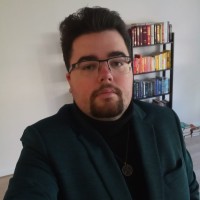
Joe van den Bergh
Joe is a recently graduated honours student from Ben Liffners lab at Adelaide University where he did his honours project on the presenting topic, making a method for expansion microscopy to work with whole arthropods. With further background studying microbiology and evolutionary biology at the University of Adelaide (now Adelaide University).
Talk title: Developing Expansion Microscopy for Whole Arthropods.
Abstract: Light microscopy is the most widely used tool in the study of cell biology but many of the subcellular structures of parasites are too small to see even with the best light microscopes. Recently, a technique called expansion microscopy that physically enlarges parasites has revolutionised parasite cell biology. To date, expansion microscopy has only been applied on either parasites grown in vitro or from isolated host tissues. I wanted to perform expansion microscopy on whole mosquitoes, to simultaneously visualise the ultrastructure of both malaria parasites and their mosquito hosts, but the presence of the chitin-rich mosquito cuticle prevents expansion. Here, I develop expansion microscopy for whole mosquitoes by first digesting the cuticle with enzymes. I validate that the mosquitoes expand as expected, show preservation of mosquito anatomy, and visualise it at high detail. This study developed, validated, and applied expansion microscopy to whole arthropods by digesting the exoskeletal cuticle of the arthropods, thereby allowing for expansion to occur. Exoskeleton-Digestion Ultrastructural-Expansion Microscopy was developed by combining known methods of cuticle removal with new developments in Ultrastructural-Expansion Microscopy. The application of this methodology allows for the co-visualisation of parasite and mosquito ultrastructure including basal lamina, salivary glands, and ovaries. Additionally, I have validated this technique for other arthropods: Ixodes holocyclus and Drosophila melanogaster, highlighting its versatility across arthropods. While developed to investigate cell biology, application of this technique could greatly improve the resolution of spatial omics techniques in the study of vector-parasite interactions and entomology.
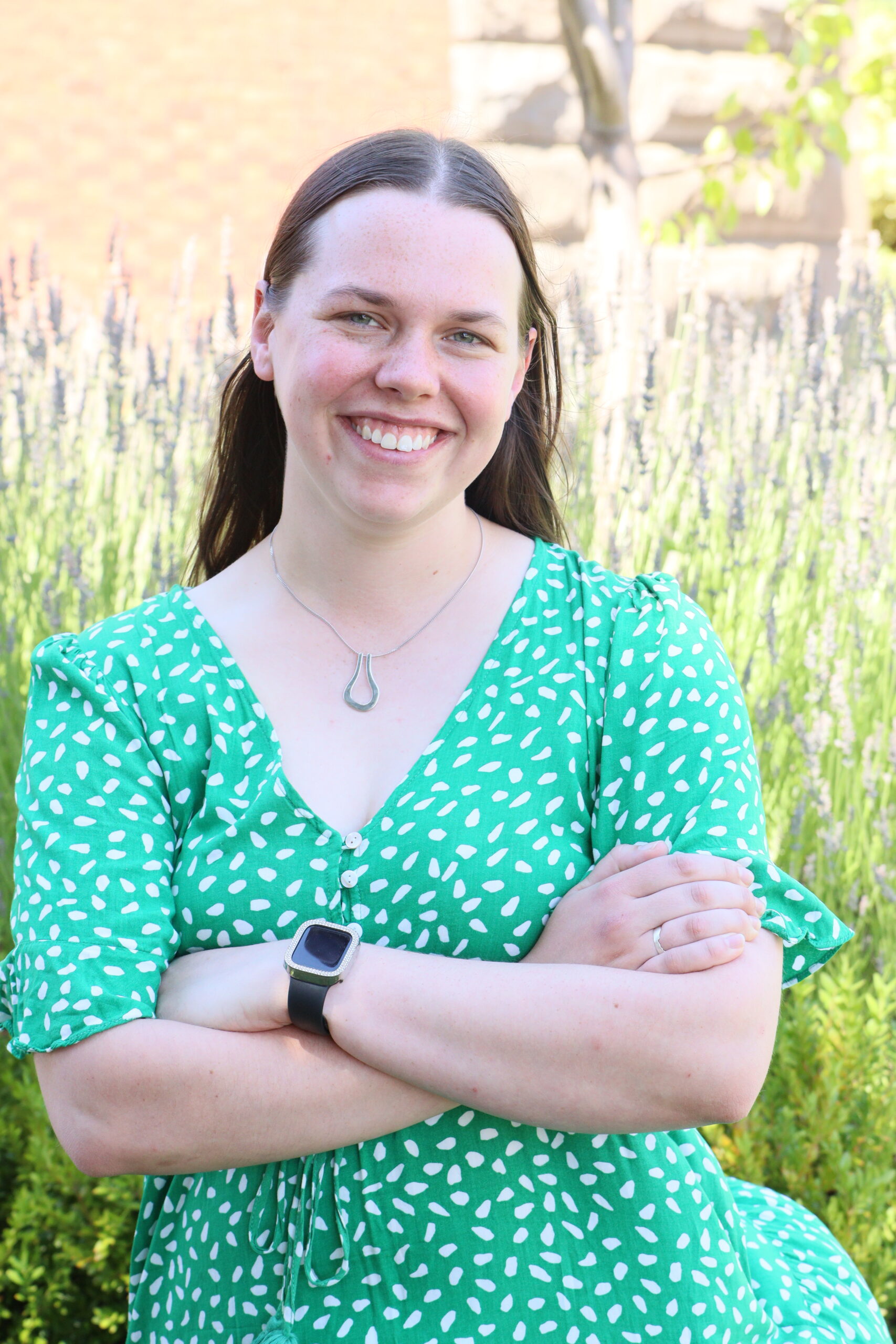 Rebecca Farnell
Rebecca (Bec) is currently completing her PhD at Federation University. The work compares diagnostic techniques for state-wide surveillance for gastrointestinal nematodes – particularly Haemonchus contortus – in sheep. This work aspires to support the industry in uptake of on-farm surveillance methods, and support farm enterprises through mapping of species across Victoria to provide farmers with this information via an online, accessible platform.
Title: Preparing for climate change: Enhanced Haemonchus contortus parasite surveillance in sheep in the Australian state of Victoria
Abstract: Australia is the largest exporter of sheep meat and products globally, with Victoria a main economic contributor to this export market. Infection with H. contortus is an important limitation in productivity in sheep due to severe impacts resulting in decreased animal health, and livestock death with high infections. Historically, H. contortus infections were reported to cause sporadic infections in Victoria. However, increased reports of H. contortus infections suggests this may not be true and this may be an important parasite limiting productivity in Victoria farms. It is proposed climate change providing more favourable conditions to Victoria, along with increased sheep transport, may be factors for increased reported infections. The current work involves a two-year seasonal sampling and regular submissions from dispersed Victoria farms to test the incidence of infections through isothermal testing and Nemabiome deep-amplicon sequencing. This data will also inform the distribution of other economically important gastrointestinal nematodes across Victoria.