

 Lenin De Silva Manage is a PhD student at the Harry Butler Institute, Murdoch University, Australia. His research is on the taxonomy, systematics, and biogeography of trematode fauna in marine fishes and marine snakes of Sri Lanka under the supervision of Prof. Alan Lymbery, Dr Storm Martin and Dr Erandi Pathirana. Lenin earned his Honours degree from Ocean University of Sri Lanka and completed his MPhil at the University of Peradeniya. Through research, he aims to enhance knowledge of parasite diversity, biogeography and aid in conservation.
Talk Title: “Morpological and Moleclar Characterisation of Digeneas (Platyhelminthes: Trematoda) Endoparasitic in Marine Snakes of Sri Lanka”
Lenin De Silva Manage, Murdoch University
Abstract:
Marine snakes are the most diverse group of extant marine reptiles, comprising over 70 species across multiple lineages. Despite hosting various metazoan parasites, their parasitic fauna remains poorly studied, with no prior records from Sri Lanka. Between August 2021 and August 2023, seven marine snake species collected from Sri Lankan fishery bycatch were examined for parasites: Acrochordus granulatus, Cerberus rynchops, Hydrophis curtus, H. cyanocinctus, H. ornatus, H. schistosus, and H. spiralis. Digenean trematodes identified included Tubulovesicula laticaudi and two Harmotrema species. Morphological and molecular analyses (COI mtDNA, ITS2, 28S rDNA) provided the first molecular data for Tubulovesicula, revealing polyphyly within Dinurinae. We propose restricting Dinurinae to taxa with a permanent sinus-organ, resurrecting Mecoderinae for those with a temporary sinus-organ, and transferring Tubulovesiculato the latter. The two species of Harmotrema are difficult to distinguish morphologically, suggest one may be H. indica, while the other likely represents a new species. Further studies are needed to resolve their taxonomy and species identities.
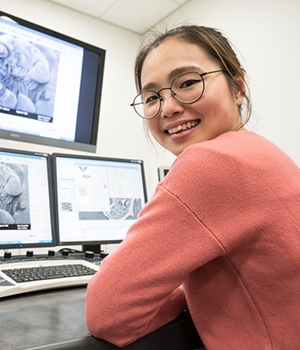 Jiwon (Joanne) Lee is a PhD candidate at the Research School of Biology, Australian National University, under the supervision of Prof. Alex Maier and A/Prof. Melanie Rug. Her research focuses on lipid storage and metabolism in Plasmodium falciparum, the deadliest human malaria parasite. Using various imaging techniques, including volume electron Microscopy and fluorescence microscopy, she investigates neutral lipid storage and mobilisation across parasite life stages. She also works as a biological microscopy specialist at the Centre for Advanced Microscopy, ANU.
Jiwon Lee1,3, Kai Matuschewski2, Giel van Dooren3, Alex Maier3 and Melanie Rug1
- Centre for Advanced Microscopy, The Australian National University, Canberra, ACT, Australia.
- Molecular Parasitology, Humboldt University, Berlin, Germany.
- Research School of Biology, The Australian National University, Canberra, ACT, Australia.
Lipid droplets (LDs) are organelles central to lipid and energy homeostasis across all eukaryotes. In the malaria-causing parasite Plasmodium falciparum the roles of LDs in lipid acquisition from its host cells and their metabolism are poorly understood, despite the high demand for lipids in parasite membrane synthesis. We systematically characterised LD size, composition and dynamics across the disease-causing blood infection. Applying split fluorescence emission analysis and 3D Focused Ion Beam-Scanning Electron Microscopy, we observed a decrease in LD size in late schizont stages. LD contraction likely signifies a switch from lipid accumulation to lipid utilisation in preparation for parasite egress from host red blood cells. We demonstrate connections between LDs and several parasite organelles, pointing to potential functional interactions. Chemical inhibition of triacylglyerol (TAG) synthesis or break-down revealed essential LD functions for schizogony and in counteracting lipid toxicity. The dynamics of lipid synthesis, storage and utilisation in P. falciparum LDs might provide a target for new anti-malarial intervention strategies.
Our ASP Online Seminar Series image is created by Thorey Jonsdottir.