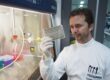


 Anjana Rai is an early-career malaria researcher. Her research focuses on the genetics of Plasmodium vivax. Her work uses parasite genotyping to better understand the parasite relatedness and trace the infection’s origin. Her work also focuses on utilising molecular approaches to study P. falciparum biology, to enhance our understanding of drug resistance.
Talk title: Genetic evidence of cross-border P. vivax spread in pre-elimination regions of South Asia
Rai A1, Sutanto E2, Ghimire P3, Wangchuk S4, Drukpa T5, Alam M.S6, Rahim A.G7,9, Rumaseb A1, Trimarsanto H1, Adhikari N3, Adhikari S3, Banjara M.R3, Rijal K.R3, Nepal R3, Regmi R3, Price R1,8,9, Ley B1, Thriemer K1, Auburn S1,9
1Menzies School of Health Research and Charles Darwin University, Australia 2Exeins Health Initiative, Indonesia 3Central Department of Microbiology, Tribhuvan University, Kirtipur, Kathmandu, Nepal 4Public Health Laboratory, Department of Public Health, Ministry of Health, Thimphu, Bhutan 5Vector Borne Disease Control Programme in Gelephu, Bhutan 6Infectious Diseases Division, International Centre for Diarrhoeal Disease Research, Bangladesh (icddr,b), Dhaka, Bangladesh 7Afghan International Islamic University, Afghanistan 8University of Oxford, UK 9Mahidol‐Oxford Tropical Medicine Research Unit, Thailand
Plasmodium vivax is the predominant cause of malaria in South Asia. While countries such as Nepal, Bangladesh, and Bhutan have significantly reduced P. vivax cases over the past decade, cross-border transmission remains a major challenge to elimination efforts. Genetic data can offer valuable insights into transmission dynamics; however, until now, no high-resolution P. vivax data existed for Nepal, and only limited data were available from Bhutan and Bangladesh. Our study generated high-resolution genotyping data from these three countries using a novel 98-marker microhaplotype assay (vivaxGEN panel) and compared them to samples from higher-endemicity countries in the regions, including Afghanistan, India, and Pakistan. Samples were collected from clinical trial, therapeutic efficacy and cross-sectional surveys conducted between 2013 and 2023. Sequencing was performed using Illumina sequencing platforms. Genetic analyses included assessing within-host diversity via effective multiplicity of infection (eMOI) and relatedness via identity by descent (IBD). High-quality genotyping data were obtained from Nepal (n=19), Bhutan (n=27), and Bangladesh (n=34); sufficient data from Afghanistan (n=158), India (n=27), and Pakistan (n=30) were available for comparative analysis in the region. Bhutan, Nepal and Bangladesh exhibited the lowest eMOI, suggesting reduced superinfection. IBD analyses revealed three genetic clusters partitioning Bangladesh, Bhutan (partial), and the high-endemic countries. Bhutan showed two sub-populations, largely separating local and imported cases. This study provides the first detailed genetic picture of P. vivax in Nepal, Bhutan, and Bangladesh, and highlights the utility of microhaplotype genotyping in improving the detection of cross-border importations.
 Shamit Singla is a 3rd-year PhD student in A/Prof Danny Wilson’s lab, Malaria & Toxoplasma Biology Lab at University of Adelaide, working on the molecular mechanism underpinning malaria parasite infection. His research predominantly involves the characterisation of unknown proteins suspected to play a role in host cell invasion, an event that is both quick and spatially small. He explores the role of invasion proteins in this event using gene modification of malaria parasites and emerging microscopy techniques.
Talk title: Form follows function. How the spatial arrangement of protein molecules can help us understand their function.
Abstract: Plasmodium falciparum is responsible for the highest proportion of malaria morbidity and mortality. Within the parasites, rhoptries are essential secretory organelles responsible for host cell invasion. Rhoptry proteins exposed to the cytosol are suspected to play a crucial role in facilitating rhoptry function due to their ability to mediate interactions between other cellular components. However, the rhoptries are smaller than the diffraction limit of visible light, which poses challenges in elucidating the spatial arrangement of rhoptry proteins and the organelle structure during host cell invasion. Within our lab, we use a newly developed technology termed expansion microscopy that circumvents this problem by increasing the sample volume and spatially separating each protein, leading to better-resolved images.