
Happy International Women’s Day 2026. From the UN Women Australia website:
“Balance the Scales is a promise that every woman and girl – regardless of background or identity – should be safe, heard, and free to shape their own lives. Yet in 2026, too many across Australia and the world are still denied that fair go. Discriminatory laws, policies, and practices persist. Gender-based violence remains widespread, and structural barriers block too many from seeking or receiving justice.
These barriers are not inevitable. They are built – and they can be dismantled.
Equality is not about advantage for some; it’s about dignity, safety, and fairness for all.
When women and girls stand equal, families are stronger, workplaces are fairer, communities thrive, and society becomes safer for everyone.
This International Women’s Day let’s Balance the Scales together.” https://www.iwd.net.au/
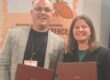
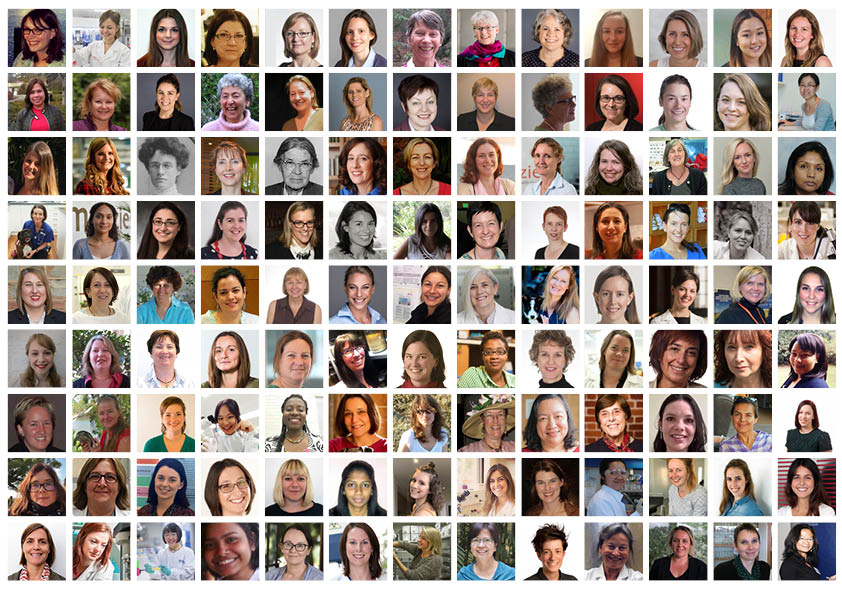
The ASP celebrate all #WomenInSTEM and to highlight #womeninparasitology read about #ASPFellow Professor Shokoofeh Shamsi.
Professor Shokoofeh Shamsi has promoted the advancement of parasitology and rendered conspicuous service to the cause of parasitology and to the Society. She has been a true ambassador of Australian Parasitology and Women in Science. Originally from Iran, she migrated to Australia where she built her academic career while raising a child as a single mother and learning to navigate science in her second language. These lived experiences have fuelled her passion for mentoring, especially for those whose paths into science have been shaped by diverse life experiences.
Professor Shokoofeh Shamsi has been a member of the Society for over 20 years. After completing a Bachelors and Masters Degrees in Iran she moved to Australia and was awarded a PhD for research in fish parasitology from the University of Melbourne in 2007. Professor Shamsi entered an academic career at Charles Sturt University (CSU) in 2010 and in 2022 she was promoted to the status of Professor in Veterinary Parasitology on account of her academic achievements, the scope of her public engagement and her service to the University.
Professor Shamsi has promoted the advancement of parasitology, in particular through her research publications, international reputation, supervision of postgraduate students, the public promotion of the awareness of parasitic disease and contributions to Committees of the Society. She has also been active in championing the role of women in science. In 2022 she was the recipient of a Scholarship that enabled her to attend the Women’s Leadership Summit in Sydney.
Her main field of research is parasites of fish, although the host range she has investigated includes fish, reptiles, pangolins, dasyurids, crustacea and birds. She has described 39 new parasite species predominantly of monogeneans and nematodes. Professor Shamsi has published around 140 papers which have been cited thousands of times (2607 at last count). Interest in her work has led to five invitations to present plenary or keynote talks.
Her awards are many and include several teaching and research performance awards from CSU, international recognition. Examples are from India and from the International Association of Zoologists. She has undertaken laboratory exchanges to Rome, South Africa, India and Japan and hosted scientists from Iran, Brazil, Singapore, Poland, Spain, India, France and the Netherlands. Prof. Shamsi has also collaborated widely with Australian experts in fish parasitology.
Professor Shamsi maintains an undergraduate teaching load and enthuses students through her parasitology teaching such that many undertake research with her and her colleagues. She has supervised 48 postgraduate students including 25 in the last 5 years, 12 for PhDs. In addition, she has also supervised 22 undergraduate research student projects. With these students she frequently leads an impressive cohort, often the most numerous from a single institution, to each annual ASP conference. Many of those have been distinguished by winning ASP student conference prizes.
A major activity of Professor Shamsi’s career has been public education of the zoonotic threats from fish parasites, in particular, the anasakids. One landmark outcome of her work was inclusion of these diseases in medical curricula in Australian universities. A second was that her work prompted national seafood safety risk assessments by the Australian Food Safety Information Council. A career highlight that cements her authority in the field was authoring the chapter ‘Nematodes and Closely Related Taxa’ in Encyclopaedia of food safety in 2023. Her media appearances number over 90, a remarkable achievement and evidence of deep commitment and consistent endeavour.
Professor Shamsi’s expertise is recognised through serving on many committees including the boards of the World Federation of Parasitologists (2022-2026) and the Food Safety Information Council (2021-2023) to name just two. She also sits on the following journal editorial boards: Parasitology Research (2017- current), Clinical Microbiology Reports (2022- current), the International Journal of Food Microbiology (2020 – current), the International Journal of Environmental Research and Public Health (2020 – current) and the World Register of Marine Species (2011 – current).
Professor Shokoofeh Shamsi continues to act as a champion for women in science whilst making significant contributions to the field of veterinary parasitology and paving the way for future generations of female scientists and is deeply committed to creating inclusive spaces in science where people from all backgrounds can thrive.
#BalanceTheScales
#IWD2026