

Celebrate National Science Week 2026! Join our online ASP Seminar Series Friday 21 August @1pm AEST, featuring Jill Chmielewski, Walter and Eliza Hall Institute of Medical Research presenting “Nanobodies against Plasmodium vivax AMA1 block parasite invasion” and PhD student Brenna Daily, The University of Queensland, presenting “Multi-omics approaches to understanding host immune heterogeneity in Plasmodium infection” with chair Ben Liffner, Adelaide University.
Please register online using this link for your unique passcode to join the seminar. After registering, you will receive a confirmation email containing information about joining the meeting.
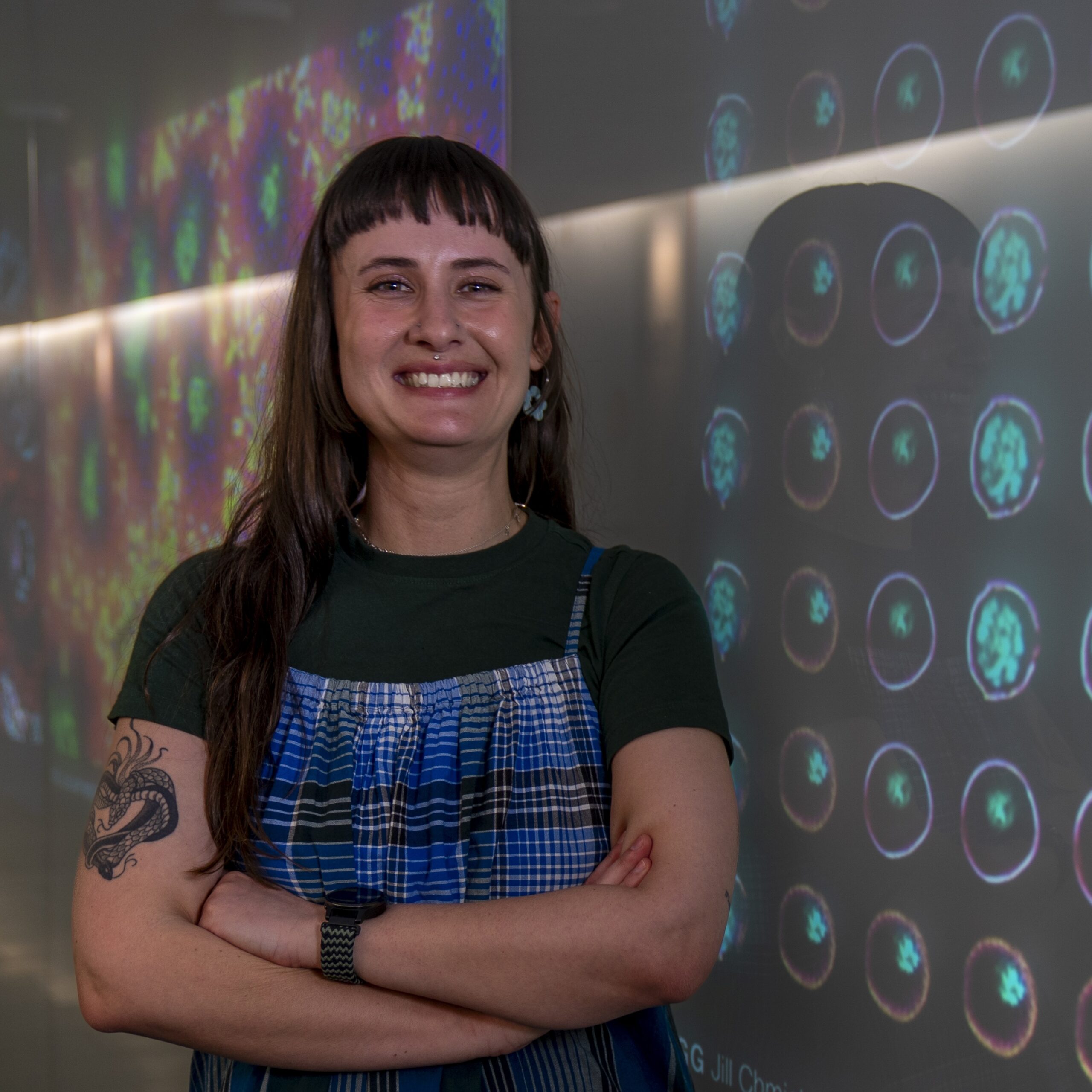
Dr Jill Chmielewski, Walter and Eliza Hall Institute of Medical Research, is a member of the Tham Lab and pictured here in the Galleria with her 2025 Art of science entry “Eligy for an egg”
Talk Title: “Nanobodies against Plasmodium vivax AMA1 block parasite invasion”
Abstract: Plasmodium vivax is the most widespread malaria species to infect human populations. P. vivax invades young red cells called reticulocytes to replicate and proliferate. An essential protein in parasite invasion is the Apical Membrane Antigen 1, PvAMA1, which forms the tight junction between parasite and red cell membranes through its interaction with Rhoptry Neck Protein 2, PvRON2. I will discuss the identification of PvAMA1 nanobodies using conventional phage display outputs in combination with next-generation sequencing and AI-structure prediction tools. Using these approaches we have been able to isolate nanobodies that bind to multiple epitopes within PvAMA1. I will present our data on their binding specificity and the role they play in blocking parasite invasion.
Jill’s biography: After completing her PhD at the University of Adelaide in 2023 under the supervision of A/Prof. Danny Wilson, Jill began a postdoctoral position at The Walter and Eliza Hall Institute of Medical Research in the laboratory of Prof. Wai-Hong Tham. Her research uses molecular parasitology and functional evaluation of antibody-based therapeutics targeting malaria parasites to help prioritise candidates with vaccine or therapeutic potential.
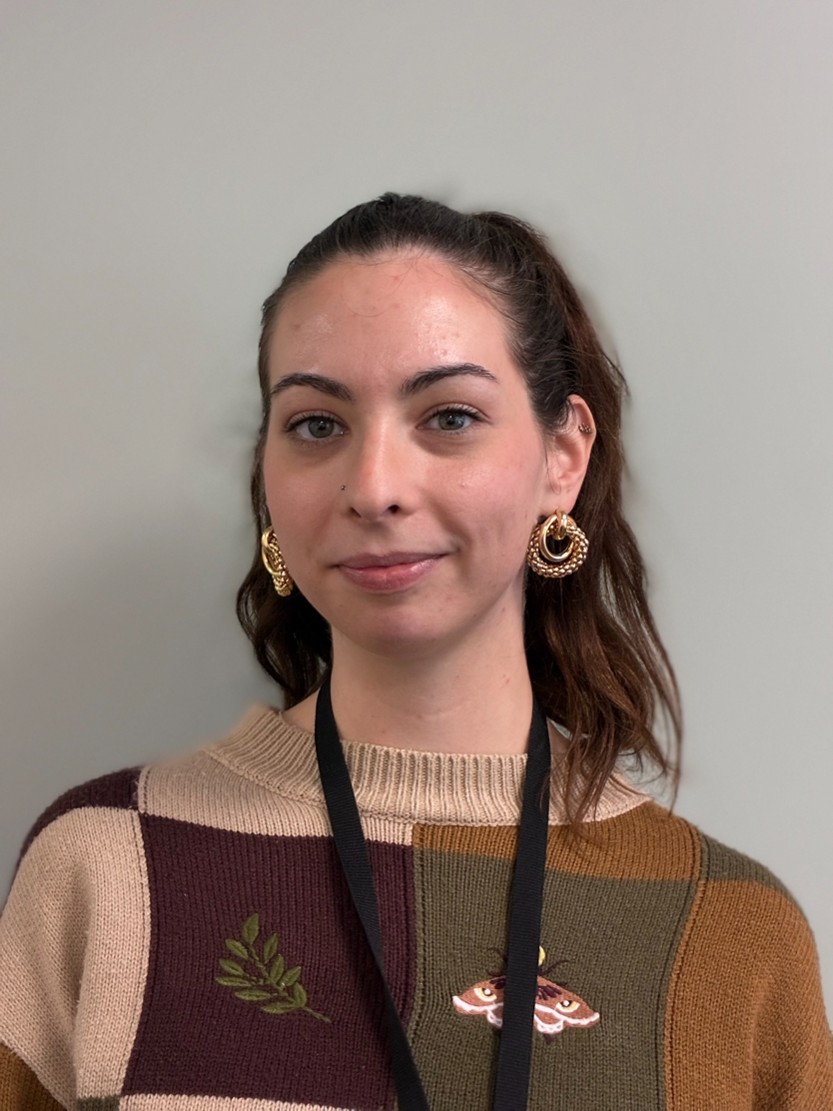 Brenna Daily, The University of Queensland completed her BSc in Forensic investigation and analysis from Atlantic Technological University Sligo in 2021, where she completed research in genetic mutational status and tumour-inflammatory response in metastatic cancer in my final year. Brenna completed her MSc in Toxicology at the University in Galway in 2022 and is in her third year of a PhD in molecular immunology under the supervision Prof Denise Doolan at the Institute of Molecular Bioscience, UQ.
Talk title: “Multi-omics approaches to understanding host immune heterogeneity in Plasmodium infection.” Brenna Daily*1,4, Ashton Kelly1, Martha Cooper2 ,3 , Quan Nguyen1,3.4, Carla Proietti1, and Denise Doolan1
1Centre for Superbug Solutions, Institute for Molecular Bioscience, The University of Queensland, Brisbane, Queensland, Australia; 2 James Cook University; 3 Centre for Population and Disease Genomics, Institute for Molecular Bioscience, The University of Queensland; 4 Genomics and Machine Learning Lab, QIMR Berghofer Medical Research Institute, Queensland, Australia.
Abstract:
Malaria remains a major global health burden, despite recent deployment of vaccines RTS, S, and R21 robust, long-lasting protection across all species and strains of Plasmodium has proven challenging.
T-cells are critical mediators during the liver stage of this infection, which acts as a key bottleneck before symptomatic blood-stage infection.
This study uses systems immunology and multi-omics integration to dissect T cell-mediated host-pathogen dynamics. Bulk and single-cell data from a controlled human malaria infection (CHMI) model enable multi-layered immune profiling, including the analysis of host-parasite interactions and key cell components at the molecular level. Using pairwise correlation methods, sets of highly expressed and strongly correlated transcript pairs were identified, and the relationships embedded within broader co-expression and regulatory networks. This approach provides a comprehensive understanding of host immune responses to Plasmodium infection, providing the first layer of insight into potential regulatory interactions during the host response to Plasmodium infection. Building on this we are in the process of applying a probabilistic unsupervised machine learning model to link these transcriptional programs to proteomic signatures of immune activation. This work will deliver new systems-level insights into malaria immunity while adapting advanced multi-omics and spatial analysis capabilities to the field of parasitology.
Our ASP Online Seminar Series image is created by Thorey Jonsdottir.